44 chapters across 5 parts. Read in sequence or open a part below.
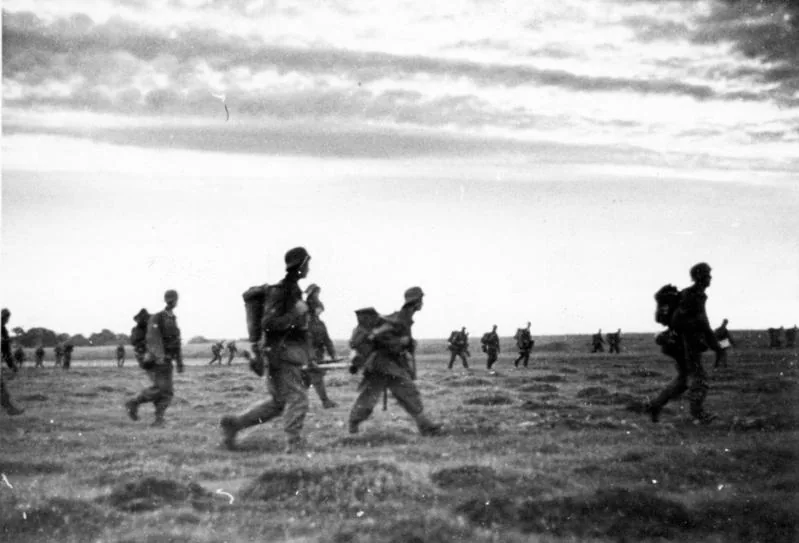
German mountain infantry on the opening morning of the invasion, June 22, 1941. The German army caption places the crossing in the Lwów sector, west of a locality named Zabiala in the caption.Image credit
Bundesarchiv, Bild 146-2007-0127 · Source · CC BY-SA 3.0 DE · Resized and converted to WebP under the same licence.
Part II · June 21, 1941–July 9, 1941
Phase I: The Opening Assault
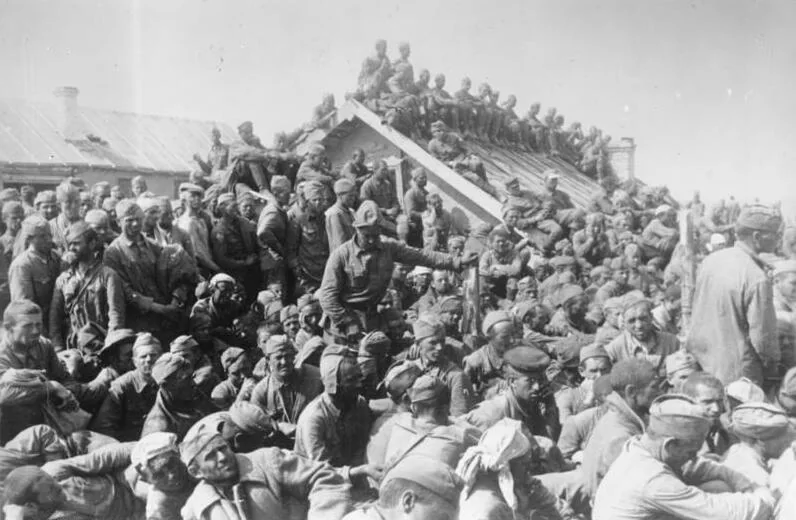
Eight studies follow preparations and the opening assault from June 21 to July 9, 1941: German advances, Soviet counterattacks and mobilization, criminal orders, captivity and persecution.
Nine studies follow Smolensk, Uman, Staraya Russa and Gomel, the German turn towards Ukraine, and the military, economic and diplomatic resources that sustained Soviet resistance.
Nine studies connect Tallinn, Yelnya, Leningrad and the Kiev encirclement with evacuation, captivity, occupation and the escalation of mass murder. Separate fronts retained different timetables and consequences.
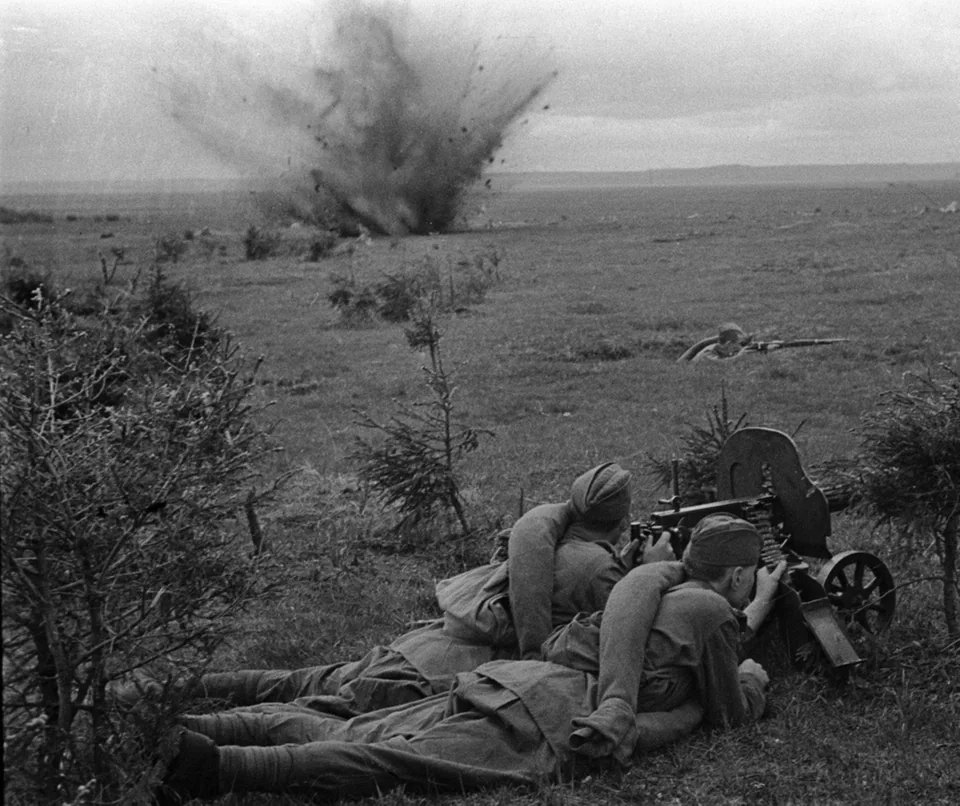
A Soviet 20th Army gun crew on the Western Front west of Dorogobuzh, in the Smolensk region. The RIA catalogue dates the photograph to September 1, 1941.Image credit
L. Bat / RIA Novosti archive, image 76 · Source · CC BY-SA 3.0 · Resized and converted to WebP under the same licence.
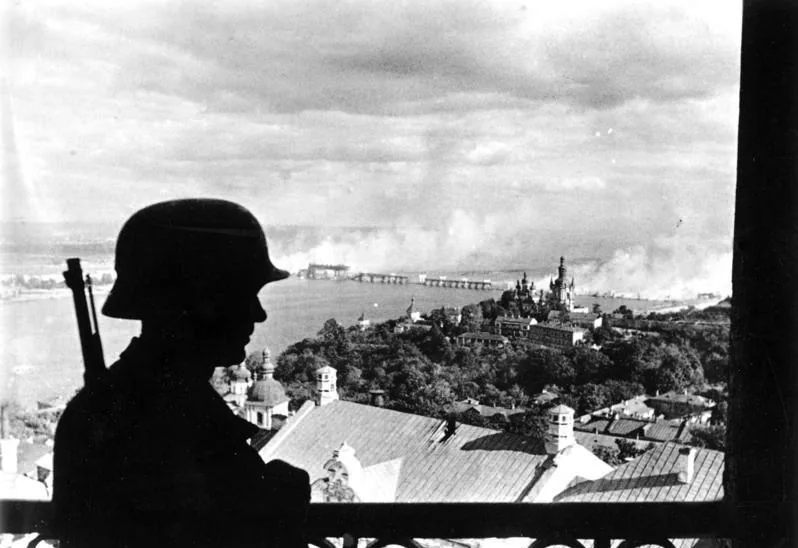
A German sentry overlooks Kyiv (Kiev) on September 20, 1941, the day after German forces entered the city. The archive identifies a burning Dnieper bridge in the distance.Image credit
Schmidt / Bundesarchiv, Bild 183-L20208 · Source · CC BY-SA 3.0 DE · Resized and converted to WebP under the same licence.
Ten studies follow Operation Typhoon from its staggered opening through the crisis at Moscow, industrial evacuation, southern occupation and the threat to Leningrad’s supply route.
Eight studies follow the final offensive against Moscow, the capture and recovery of Rostov, the canal fighting and the opening Soviet counteroffensive. The following part continues into the winter counteroffensives.