24 chapters across 4 parts. Read in sequence or open a part below.
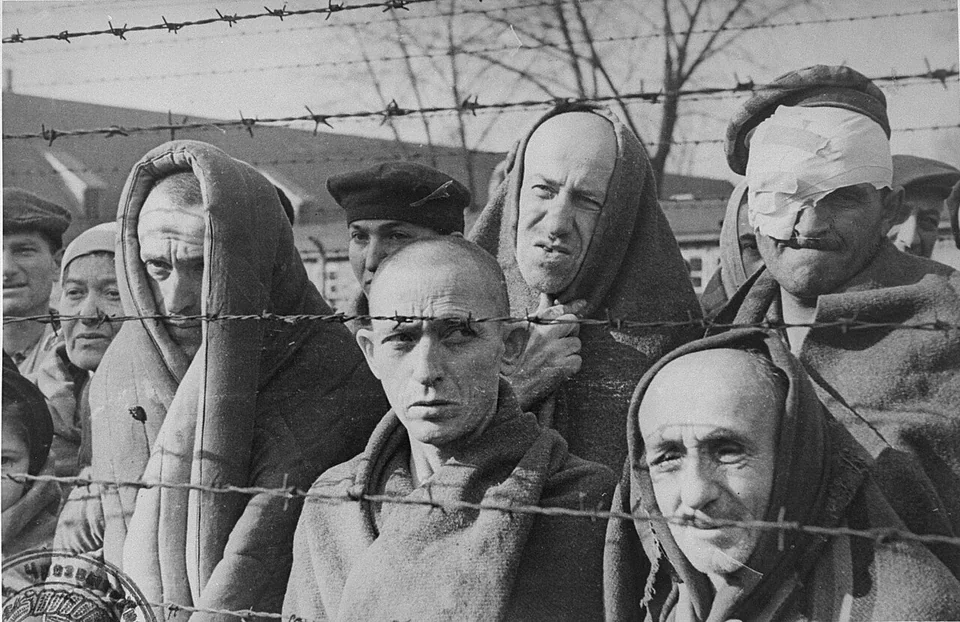
Auschwitz survivors after liberation, 1945. This still comes from the Soviet First Ukrainian Front’s film, whose crews began filming on January 27, 1945. The date of this frame is unconfirmed.Image credit
United States Holocaust Memorial Museum, courtesy of the Belarusian State Archive of Documentary Film and Photography · Source · Public domain · Resized and converted to WebP
Part XXIII · January–February 1945
From the Vistula to the Oder
The January offensive, Polish cities, Auschwitz and the death marches, the advance to the Oder, East Prussia and the reasons for the pause.
Auschwitz survivors after liberation, 1945. This still comes from the Soviet First Ukrainian Front’s film, whose crews began filming on January 27, 1945. The date of this frame is unconfirmed.Image credit
United States Holocaust Memorial Museum, courtesy of the Belarusian State Archive of Documentary Film and Photography · Source · Public domain · Resized and converted to WebP
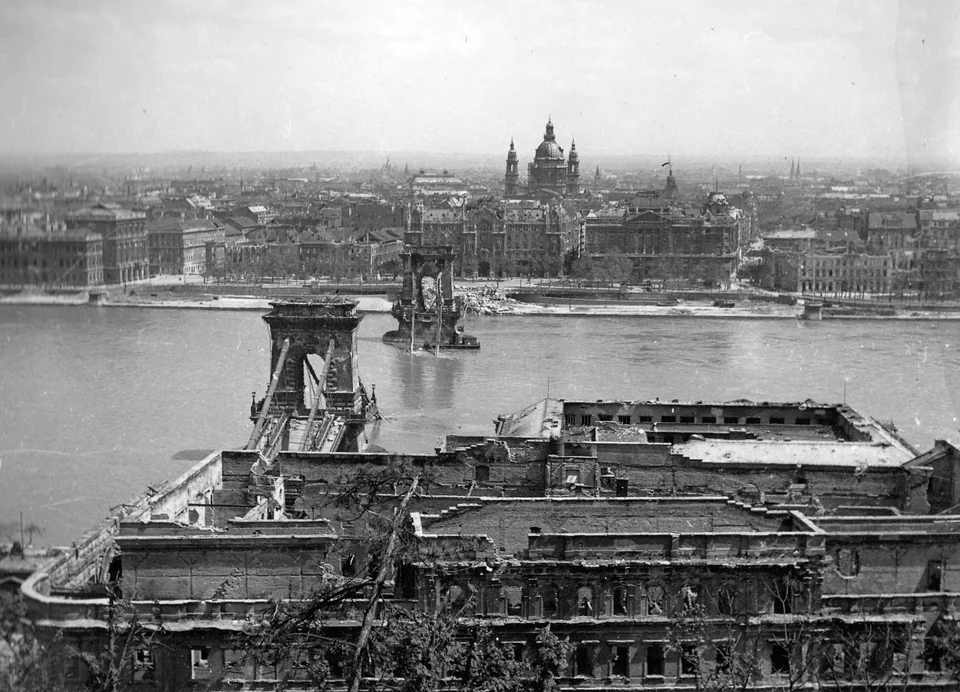
The destroyed Chain Bridge and the Pest bank of the Danube, seen from Buda Castle in 1945. The remaining bridges were blown during the German withdrawal from Pest.Image credit
FOTO:FORTEPAN / Military Museum of Southern New England, image 30895 · Source · CC BY-SA 3.0 · Resized and converted to WebP
Part XXV · April 1945 With the Halbe breakout followed into early May
The Battle for Berlin Begins
The planning and opening of the Berlin operation, Seelow and the Neisse crossings, Berlin’s encirclement, the Elbe meeting, Halbe and the fighting in the city.
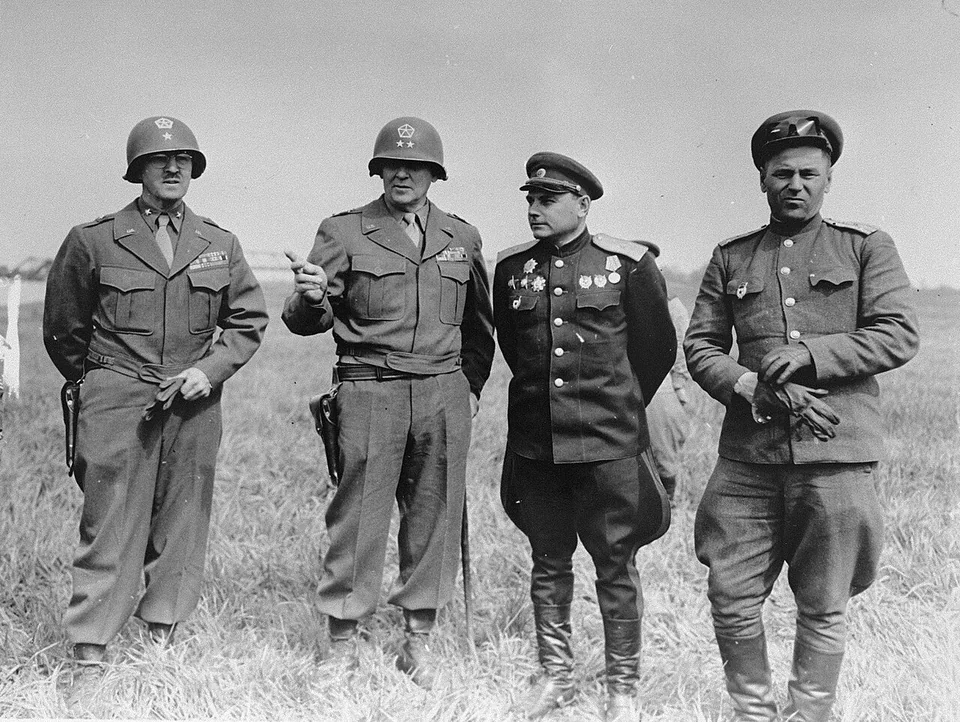
American and Soviet generals pose near Torgau on April 26, 1945, the day after American and Soviet troops first made contact along the Elbe.Image credit
U.S. Army Signal Corps / National Archives, 111-SC-229966, via USHMM · Source · Public domain, U.S. government work · Resized and converted to WebP
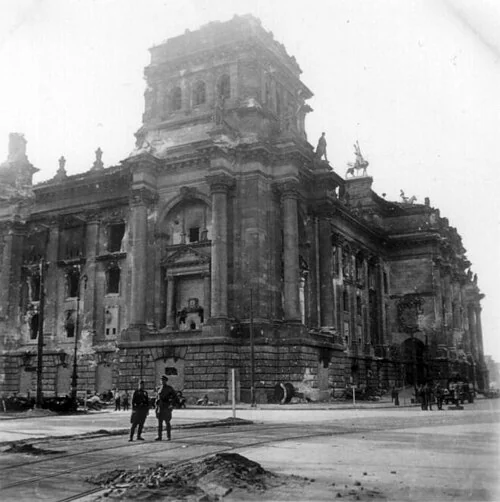
The government quarter, the collapse of German command, Berlin’s capitulation, armies still in the field, general surrender, Prague and survival in May 1945.
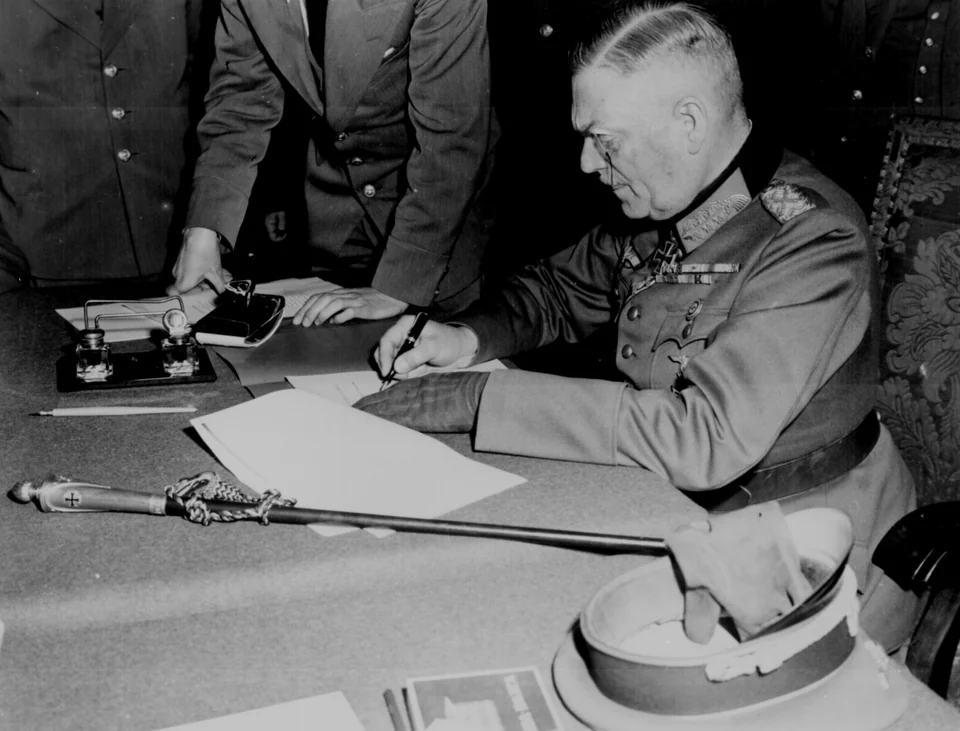
Field Marshal Wilhelm Keitel signs the German surrender instrument at Soviet headquarters in Berlin-Karlshorst during the ceremony of May 8–9, 1945.Image credit
U.S. Army Signal Corps / National Archives, 111-SC-206292 · Source · Public domain, U.S. government work · Resized and converted to WebP