18 chapters across 3 parts. Read in sequence or open a part below.
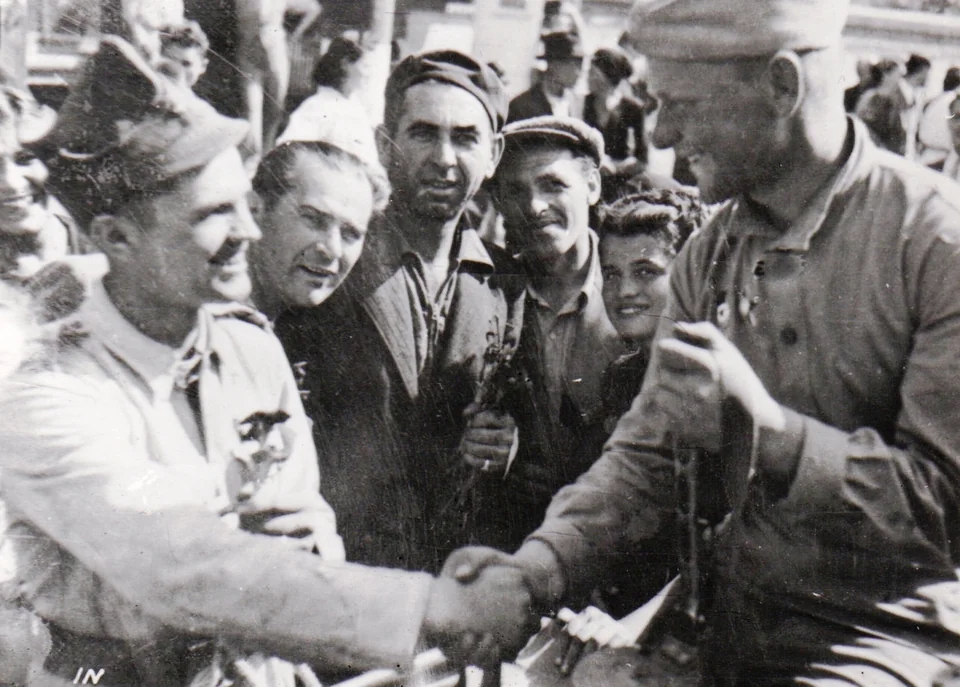
A Soviet soldier and civilians greet one another in Bucharest in late August 1944, after Romania changed sides. The collection dates the photograph to August 30.Image credit
Part XX · August–October 1944 With the background to Hungary’s occupation in March
The Collapse of Germany’s Southern Allies
The Jassy–Kishinev offensive, Romania’s change of sides, the advance toward Belgrade, German control in Hungary, the Slovak uprising and the road to Budapest.
A Soviet soldier and civilians greet one another in Bucharest in late August 1944, after Romania changed sides. The collection dates the photograph to August 30.Image credit
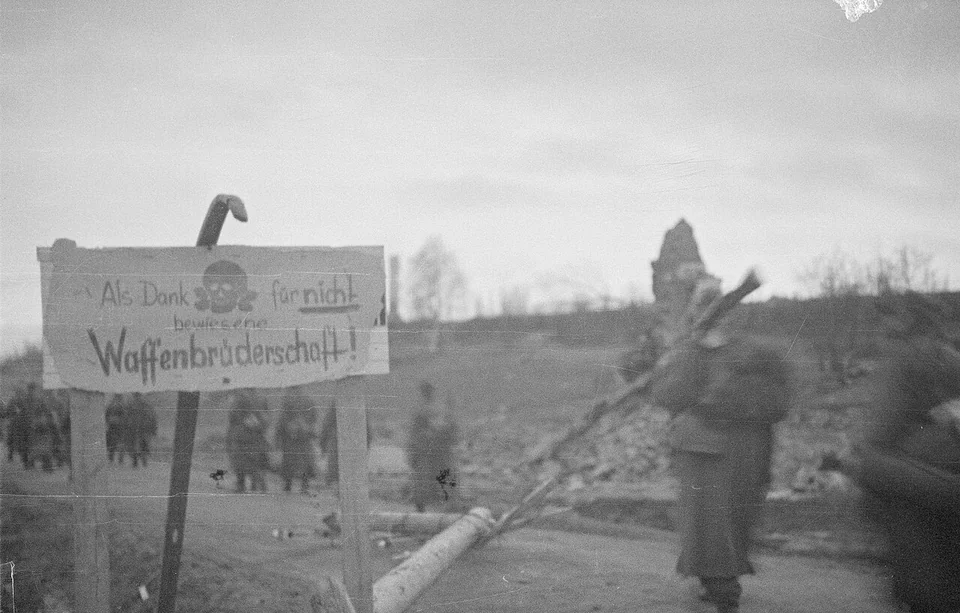
A sign at Muonio, Finnish Lapland, on October 31, 1944. Departing German troops left a message accusing their former allies of betraying their comradeship.Image credit
A. Viitasalo / Military Museum of Finland, SA-kuva 148587 · Source · CC BY 4.0 · Resized and converted to WebP
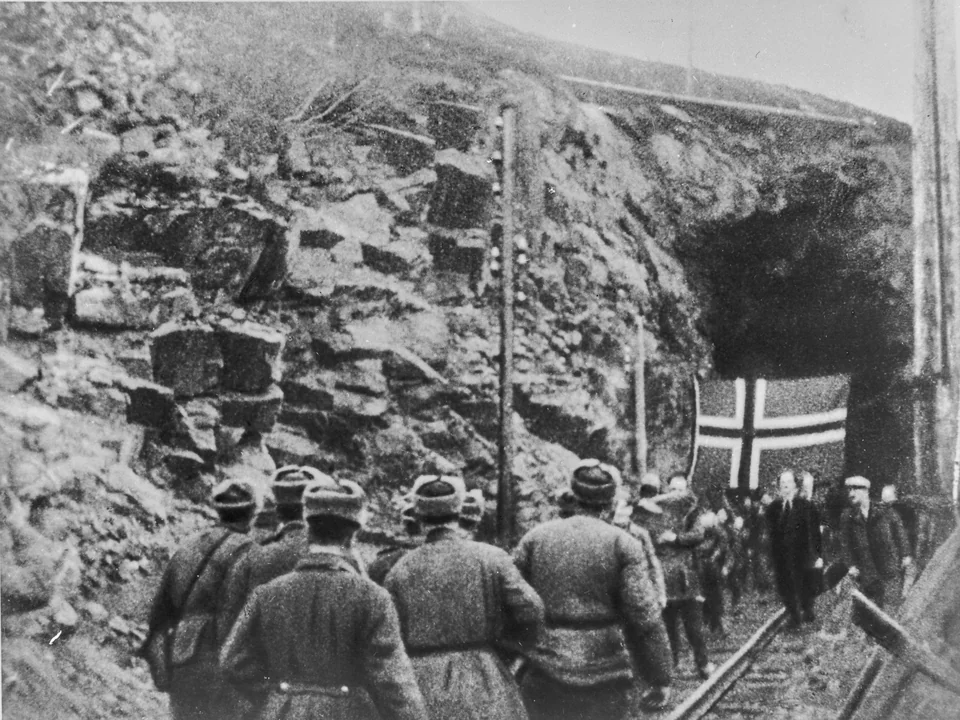
Soviet soldiers and Norwegian civilians meet in Kirkenes after the Red Army entered the town in October 1944. The archive gives the year and leaves the exact day unspecified.Image credit
Fotokhronika TASS / National Archives of Norway, NTB War Archive RA/PA-1209/U/Uj/L0219a · Source · No known copyright restrictions · Resized and converted to WebP
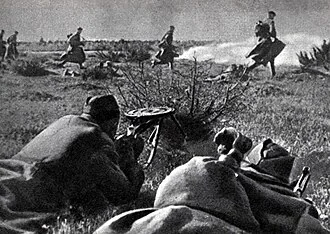
Soviet infantry in action near Riga, Latvia, in October 1944, during the Baltic offensive. The source leaves the exact position unspecified.Image credit
Mil.ru, Russian Ministry of Defence · Source · CC BY 4.0 · WebP conversion
Warsaw’s defeat, returning Soviet authority in Poland, the encirclement of Budapest, persecution and survival in Hungary, and preparations for the January offensive.
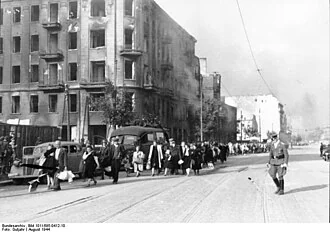
Civilians leave a damaged district of Warsaw in early August 1944 during the uprising. The German wartime photograph records the displacement that accompanied the fighting.Image credit
Bundesarchiv, Bild 101I-695-0412-10 / Gutjahr · Source · CC BY-SA 3.0 DE · WebP conversion
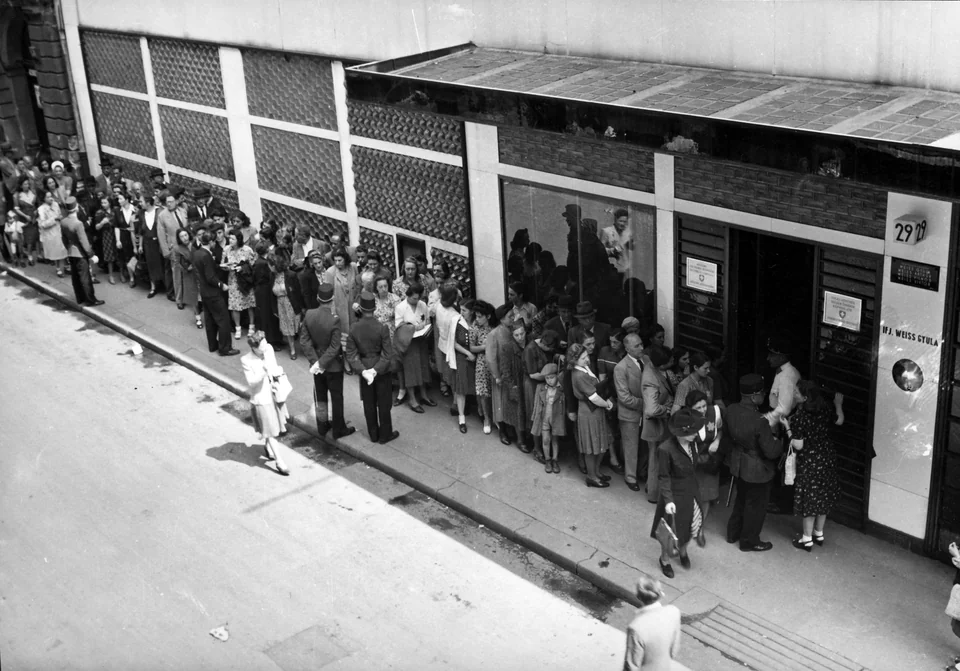
People queue outside the Glass House at 29 Vadász Street, Budapest, in 1944. Swiss diplomat Carl Lutz’s rescue operation used the building to shelter and assist Jews facing persecution.Image credit
FOTO:FORTEPAN / Archiv für Zeitgeschichte ETH Zürich / Agnes Hirschi, image 105767 · Source · CC BY-SA 3.0 · Resized and converted to WebP