19 chapters across 3 parts. Read in sequence or open a part below.
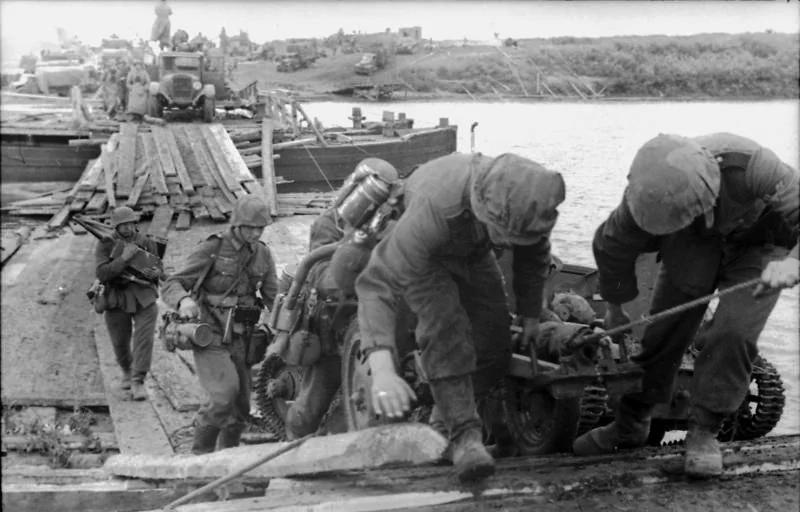
German troops at a temporary river crossing near Voronezh. The Bundesarchiv dates the scene to June 1942 and leaves the river unidentified.Image credit
Bundesarchiv, Bild 101I-216-0417-18 / Dieck · Source · CC BY-SA 3.0 DE · Resized and converted to WebP
Part X · April–early August 1942
Case Blue and the Advance South
The decisions behind Case Blue, its opening, Voronezh, the Don retreat and Rostov. This part deliberately returns to spring planning after the account of Sevastopol.
German troops at a temporary river crossing near Voronezh. The Bundesarchiv dates the scene to June 1942 and leaves the river unidentified.Image credit
Bundesarchiv, Bild 101I-216-0417-18 / Dieck · Source · CC BY-SA 3.0 DE · Resized and converted to WebP
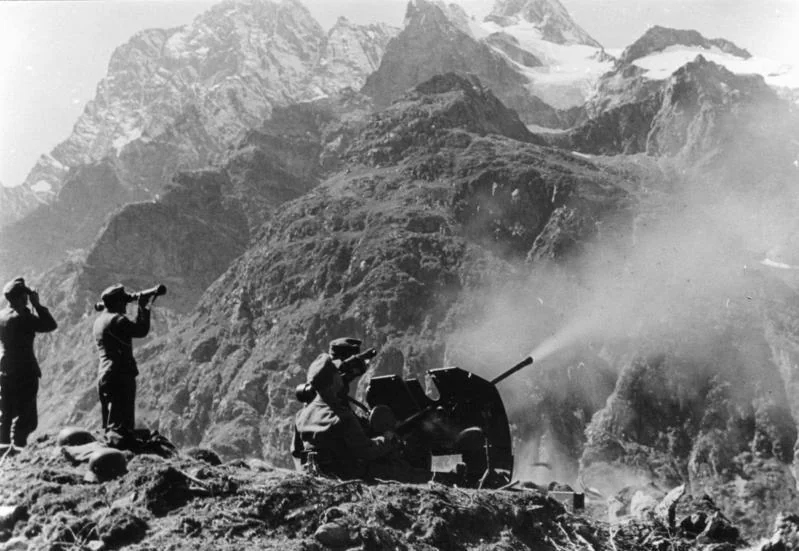
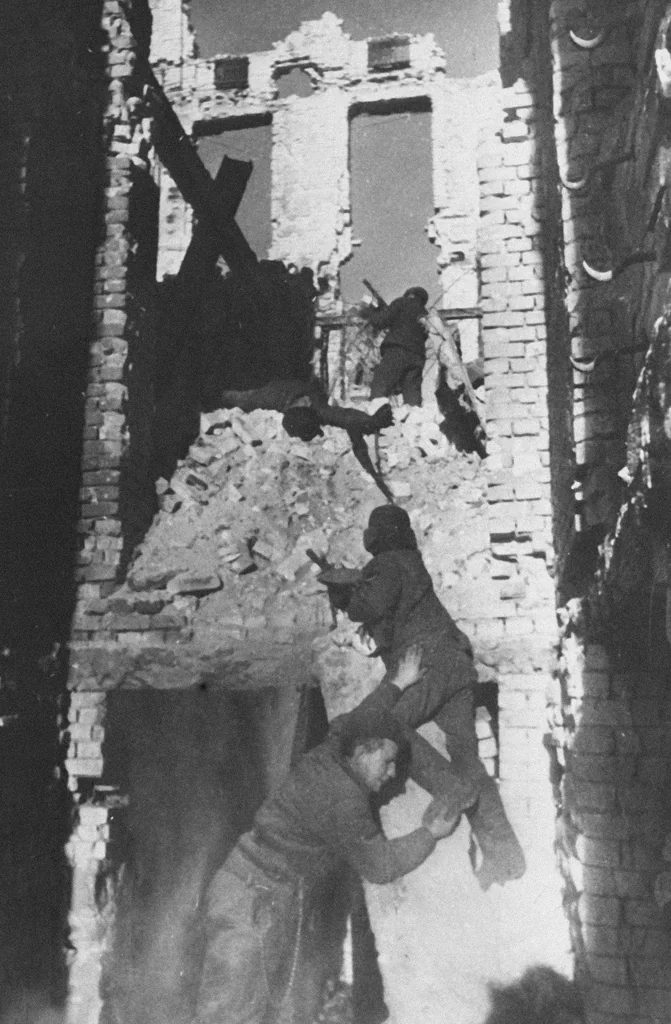
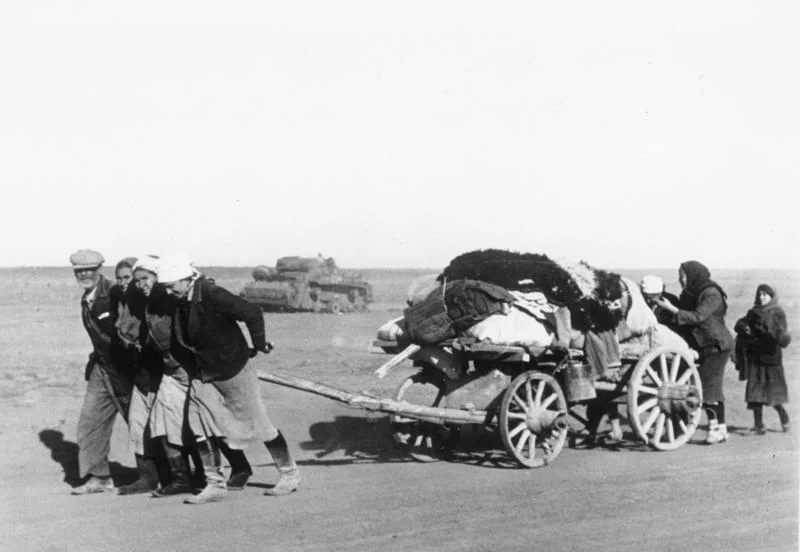
The Caucasus offensive and the fighting for Stalingrad, civilian life under attack and occupation, the continuing northern and central battles, and preparations for Uranus.
Uranus, the airlift, Mars and Velikiye Luki, relief and counteroffensive operations, Iskra, and the destruction of the Stalingrad pocket. The following part returns to the overlapping Caucasus withdrawal and Soviet advances in January 1943.
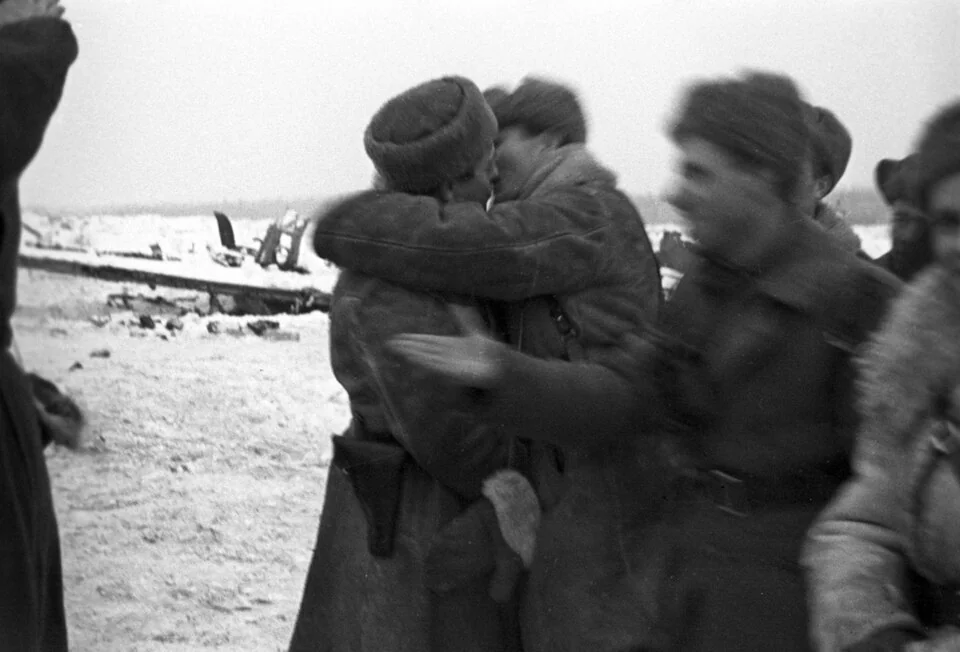
Troops of the Leningrad and Volkhov Fronts meet near Workers’ Settlement No. 5, January 18, 1943. Their junction opened a land corridor to Leningrad.Image credit
Dmitriy Kozlov / RIA Novosti archive, image 602484 · Source · CC BY-SA 3.0 · Resized and converted to WebP
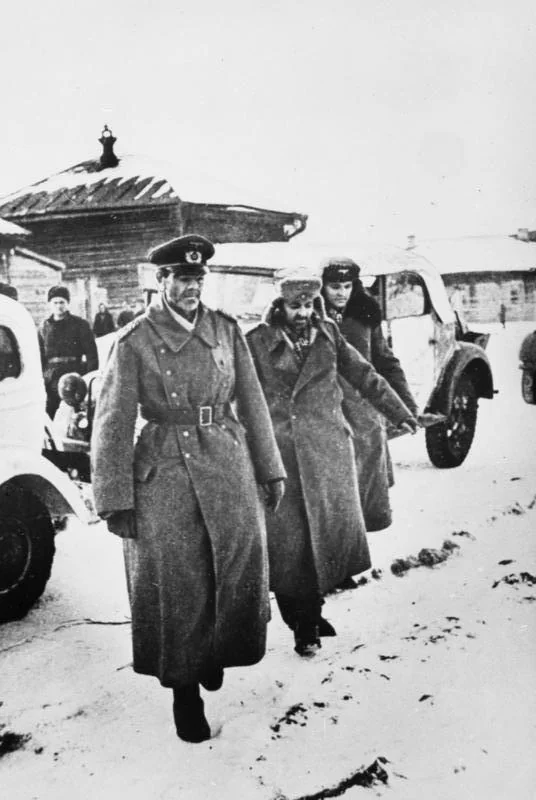
Friedrich Paulus, Arthur Schmidt and Wilhelm Adam arrive at Soviet 64th Army headquarters in Beketovka on January 31, 1943, after the surrender of the southern pocket at Stalingrad.Image credit
Bundesarchiv, Bild 183-F0316-0204-005 / probably Georgi Lipskerov · Source · CC BY-SA 3.0 DE · Resized and converted to WebP