17 chapters across 3 parts. Read in sequence or open a part below.
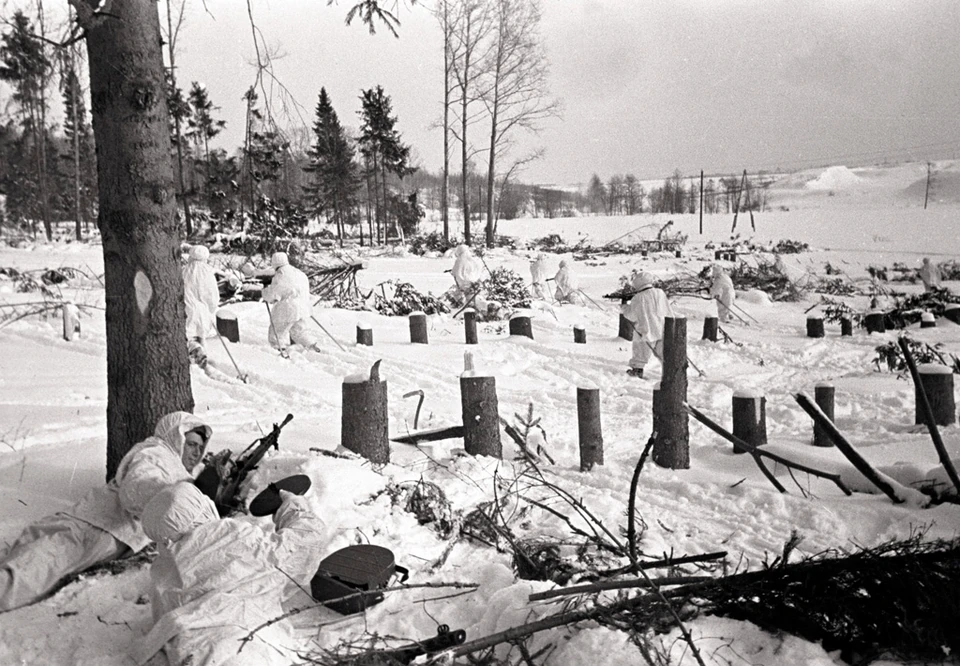
Red Army soldiers in white winter camouflage at the edge of a forest in the Moscow region, December 1941.Image credit
RIA Novosti archive, image #284 / Knorring / CC BY-SA 3.0 · Source · CC BY-SA 3.0 · Resized and converted to WebP; embedded metadata removed. No additional crop. Adapted images remain available under the same ShareAlike licence. Embedded colour profile converted to sRGB before removal to preserve appearance.
Part VII · December 1941–January 1942
The Counterstroke Before Moscow
The counterstroke before Moscow, Tikhvin’s recovery, German command changes and the experience of people on recovered ground. The opening attacks took place on different fronts and dates.
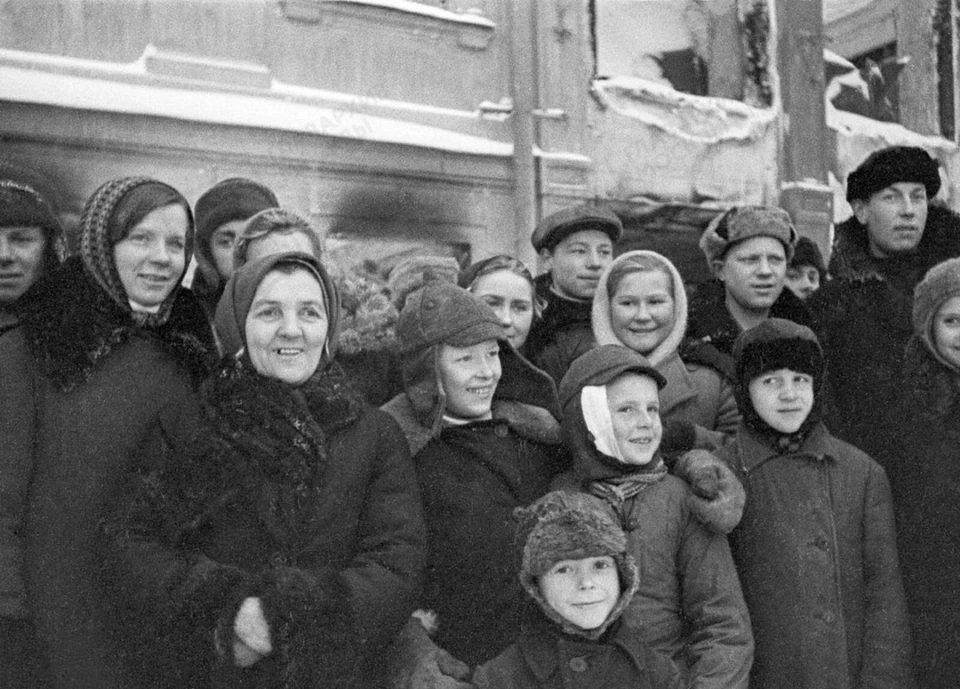
Residents of Kalinin, now Tver, after the city's liberation by the Red Army, December 1941.Image credit
Boris Vdovenko / Moscow Main Archive / Mos.ru, CC BY 4.0 · Mos.ru · Source · CC BY 4.0 · Resized and converted to WebP; embedded metadata removed. No additional crop.
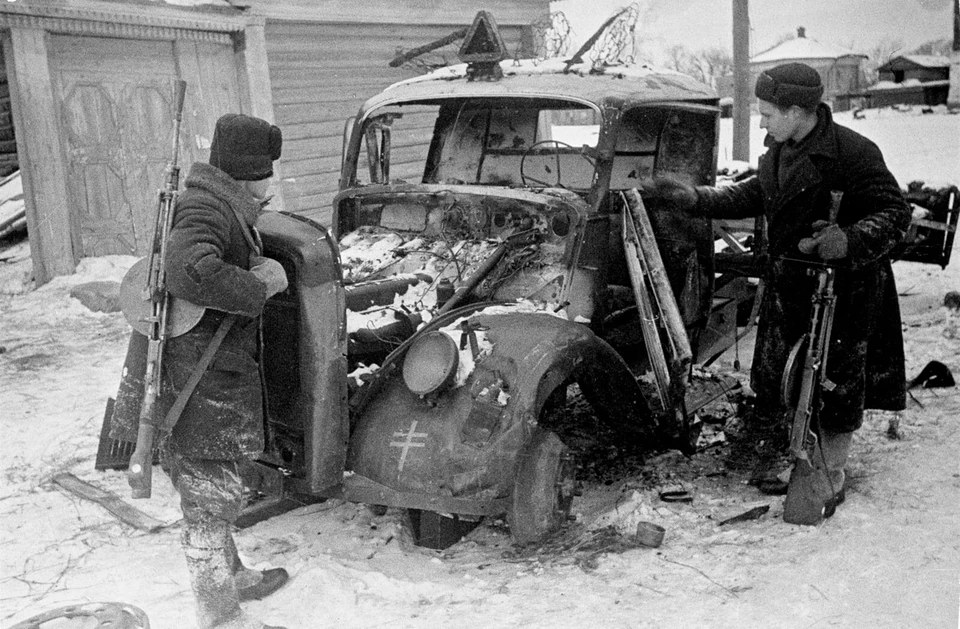
Members of the Mozhaisk partisan detachment beside a wrecked German vehicle in the Moscow region; photographed no later than January 20, 1942.Image credit
M. Bachurin / Moscow Main Archive / Mos.ru, CC BY 4.0 · Mos.ru · Source · CC BY 4.0 · Resized and converted to WebP; embedded metadata removed. No additional crop. Embedded colour profile converted to sRGB before removal to preserve appearance.
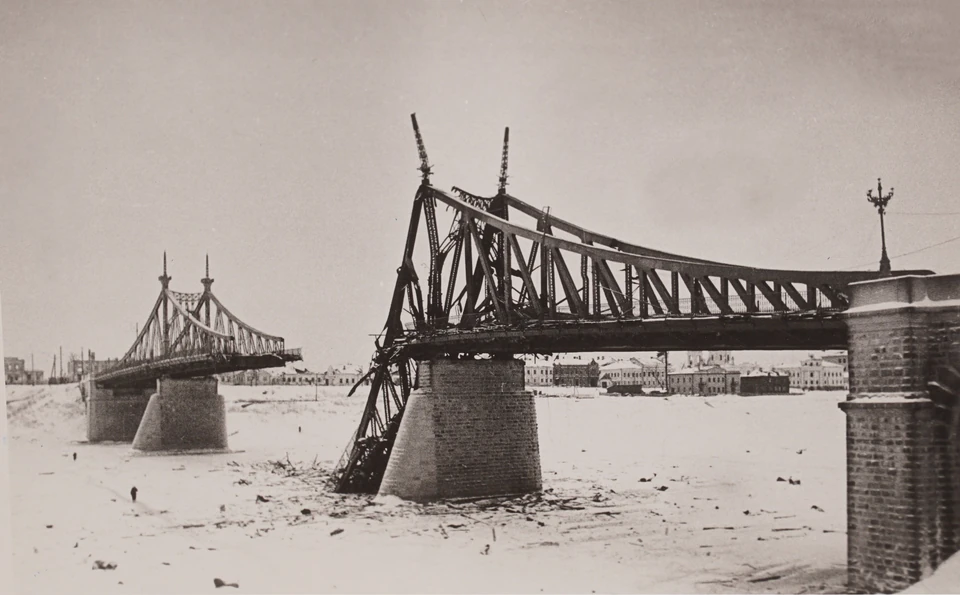
Destroyed spans of the Starovolzhsky Bridge over the frozen Volga at Kalinin, now Tver, in the winter of 1941–1942.Image credit
Alexander Ustinov / Moscow Main Archive / Mos.ru, CC BY 4.0 · Mos.ru · Source · CC BY 4.0 · Resized and converted to WebP; embedded metadata removed. No additional crop.
The wider winter offensives: Rzhev–Vyazma, Toropets, Kholm, Demyansk, Lyuban and Barvenkovo. Advances and encirclements are followed through their different outcomes.
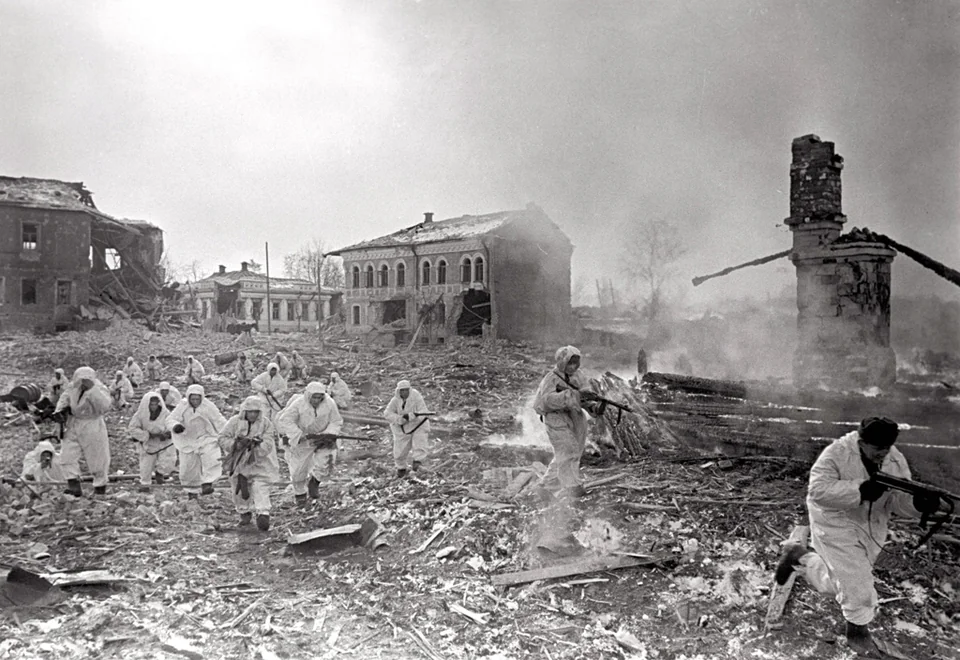
Soviet scouts amid the ruins of Yukhnov, Kaluga Oblast. The archive dates the photograph to April 10, 1942, after the German withdrawal in March.Image credit
Vladimir Grebnev / RIA Novosti archive, image 281 · Source · CC BY-SA 3.0 · Resized and converted to WebP
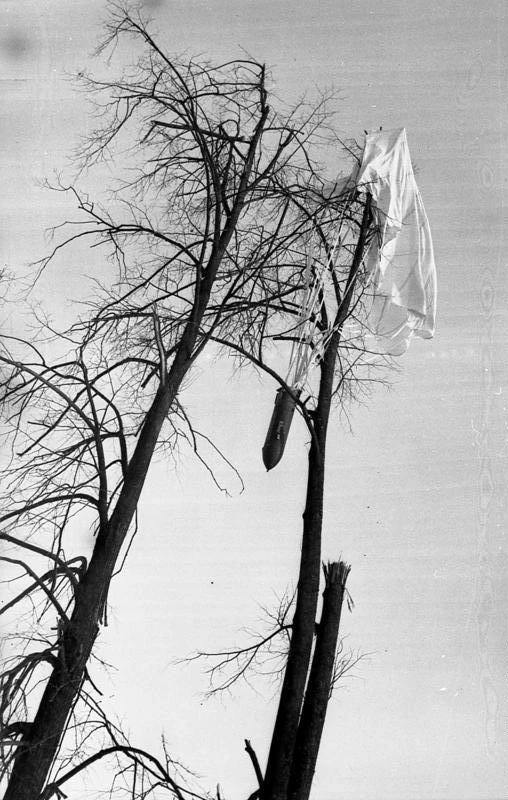
An air-dropped supply container and parachute caught in a tree in the Kholm pocket, 1942. The archive places the photograph between late January and early May.Image credit
Bundesarchiv, Bild 101I-004-3648-05 / Muck, Richard / CC-BY-SA 3.0 · Source · CC BY-SA 3.0 de · Resized and converted to WebP; embedded metadata removed. No additional crop. Adapted images remain available under the same ShareAlike licence. The Commons source previously had its caption bar losslessly cropped.
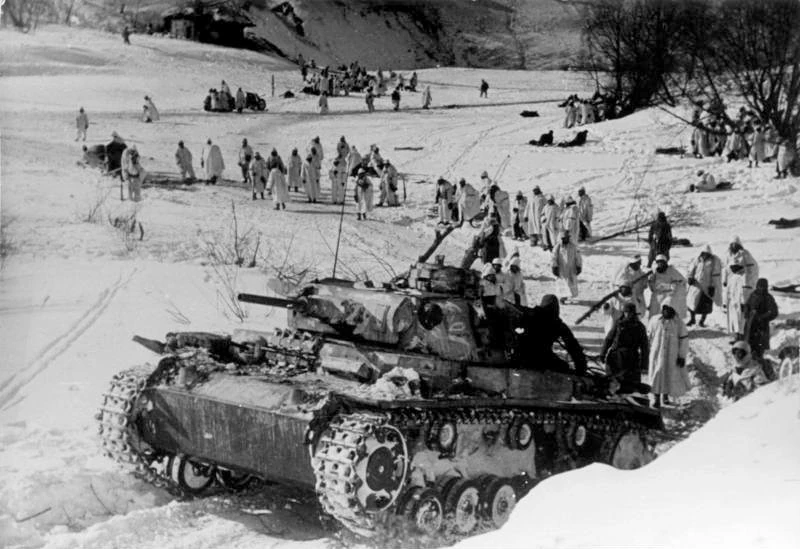
A German tank and infantry in winter camouflage near Demyansk, March 21, 1942.Image credit
Bundesarchiv, Bild 146-1972-042-42 / CC-BY-SA 3.0 · Source · CC BY-SA 3.0 de · Resized and converted to WebP; embedded metadata removed. No additional crop. Adapted images remain available under the same ShareAlike licence. The Commons source was previously cropped and had levels adjusted by Hohum.
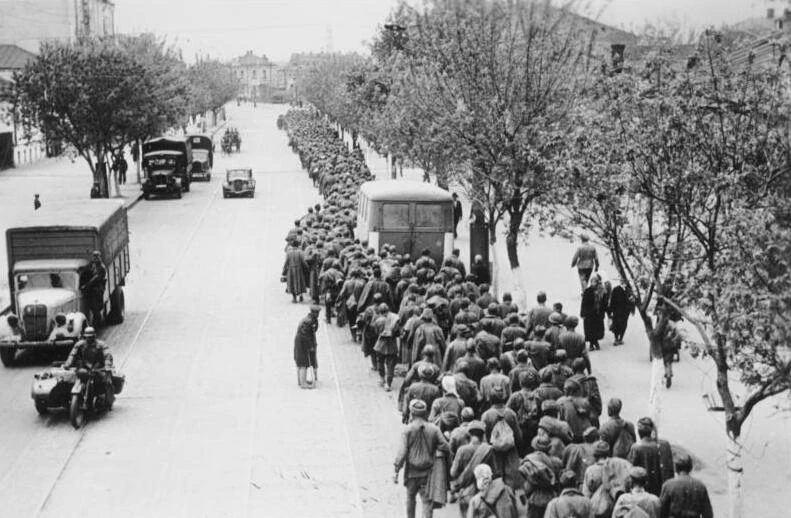
Soviet prisoners of war are marched through Kharkov, May 1942.Image credit
Bundesarchiv, Bild 183-B26082 / Schneider / CC-BY-SA 3.0 · Source · CC BY-SA 3.0 de · Resized and converted to WebP; embedded metadata removed. No additional crop. Adapted images remain available under the same ShareAlike licence. The Commons source previously had its border removed by Beao, with a crop of 1 per cent horizontally and 4 per cent vertically.
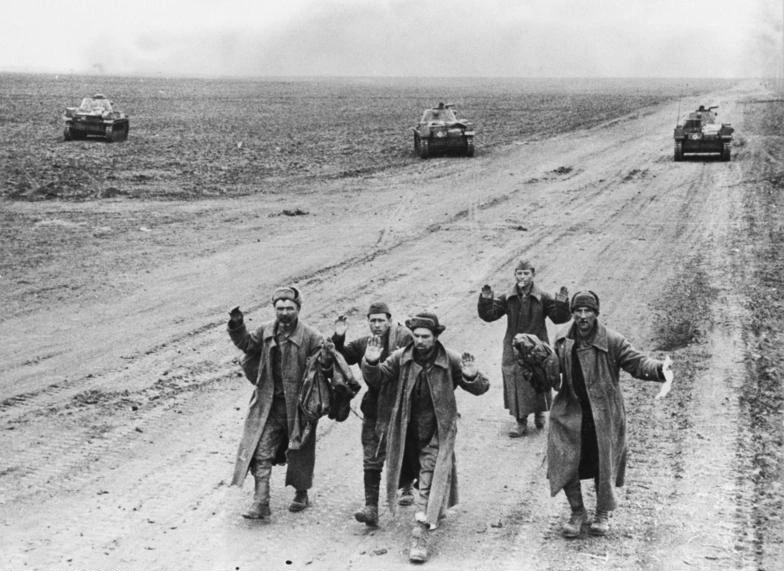
Soviet soldiers surrender on the Kerch Peninsula, Crimea, May 1942.Image credit
Bundesarchiv, B 145 Bild-F016237-0022A / CC-BY-SA 3.0 · Source · CC BY-SA 3.0 de · Resized and converted to WebP; embedded metadata removed. No additional crop. Adapted images remain available under the same ShareAlike licence. The Commons source previously had its caption bar losslessly cropped.
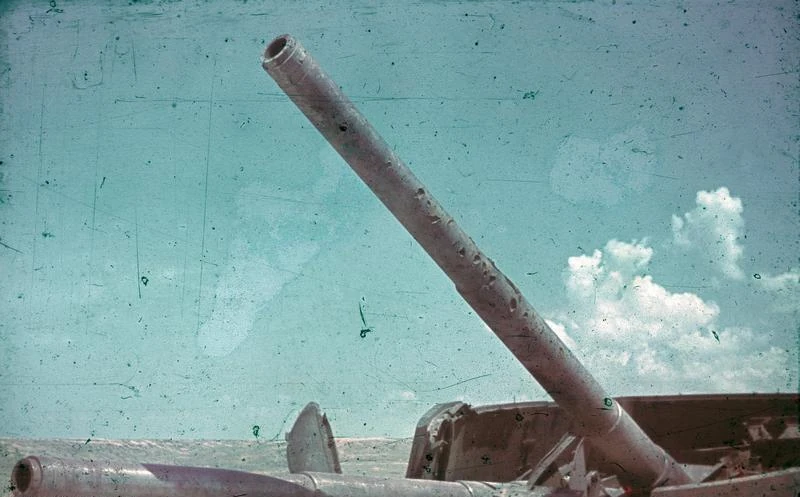
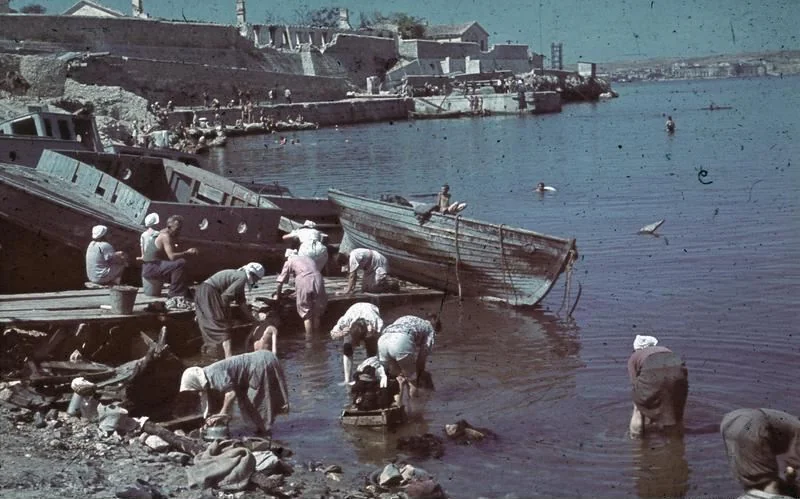
A damaged twin-gun turret at the Maxim Gorky coastal battery near Sevastopol, Crimea, June 1942.Image credit
Bundesarchiv, N 1603 Bild-118 / Horst Grund / CC-BY-SA 3.0 · Source · CC BY-SA 3.0 de · Resized and converted to WebP; embedded metadata removed. No additional crop. Adapted images remain available under the same ShareAlike licence. The Commons source was previously cropped 4 per cent vertically.